
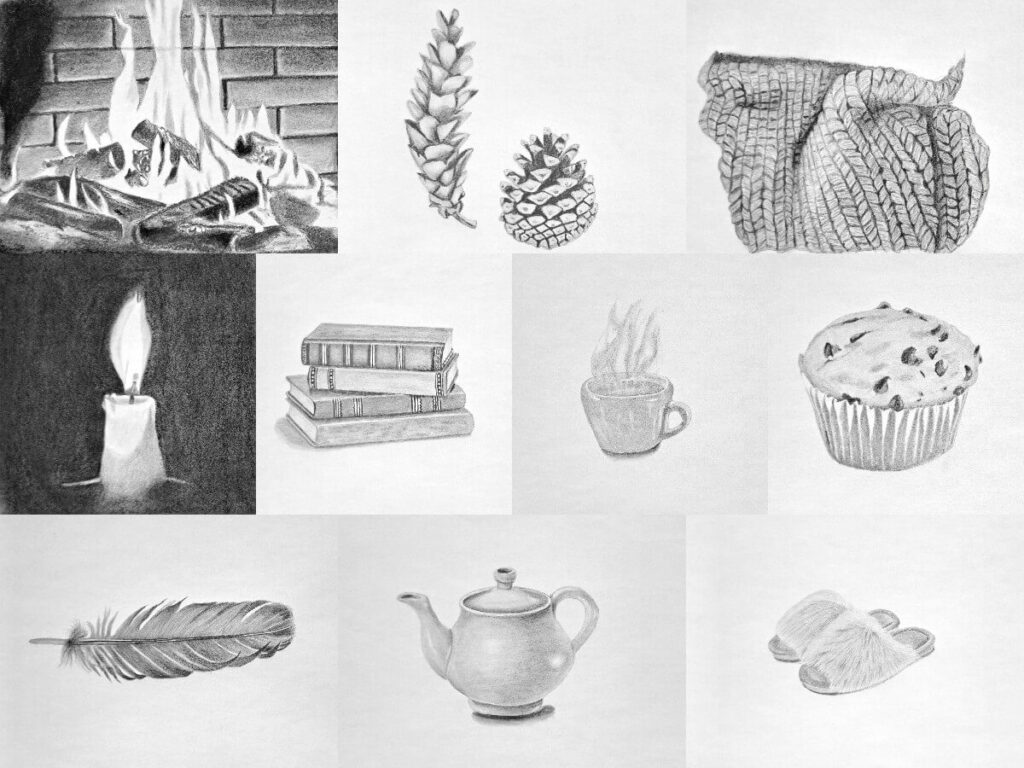
Every season comes with new opportunities and challenges.
Winter is one of those times the light gets softer, the days get quieter, and suddenly everything around us feels slower and more tactile.
This provides a perfect opportunity to reflect, and as artists or everyday people looking for ways to indulge in creative activities, it’s an ideal time for the texture drawing challenge.
That’s why I’ve come up with eleven cozy objects to sketch during the winter months. Ultimately, it’s up to you how detailed and realistic you want your artwork. If you want to take this challenge even further, I have 52 drawing ideas that you can draw every week for a year.
Why texture drawing studies matter in winter
Texture drawing studies are particularly valuable in winter because the season offers a unique combination of dramatic environmental contrasts and a naturally slower pace for observation.
It trains your eye to notice value changes, edges, material properties, rough vs smooth, warmth, comfort, and subtle patterns. This is because learning to see relationships of light and shadow is far more important than outlining objects.
In that respect, winter objects and scenes are perfect for this because they’re soft, layered, worn, and imperfect. All perfect ingredients to spark inspiration and provide a satisfying challenge.
Let’s get into the challenge.
11 Cozy Objects to Draw in Winter
Warm Beverages and Treats
1. A steaming mug of hot cocoa or coffee
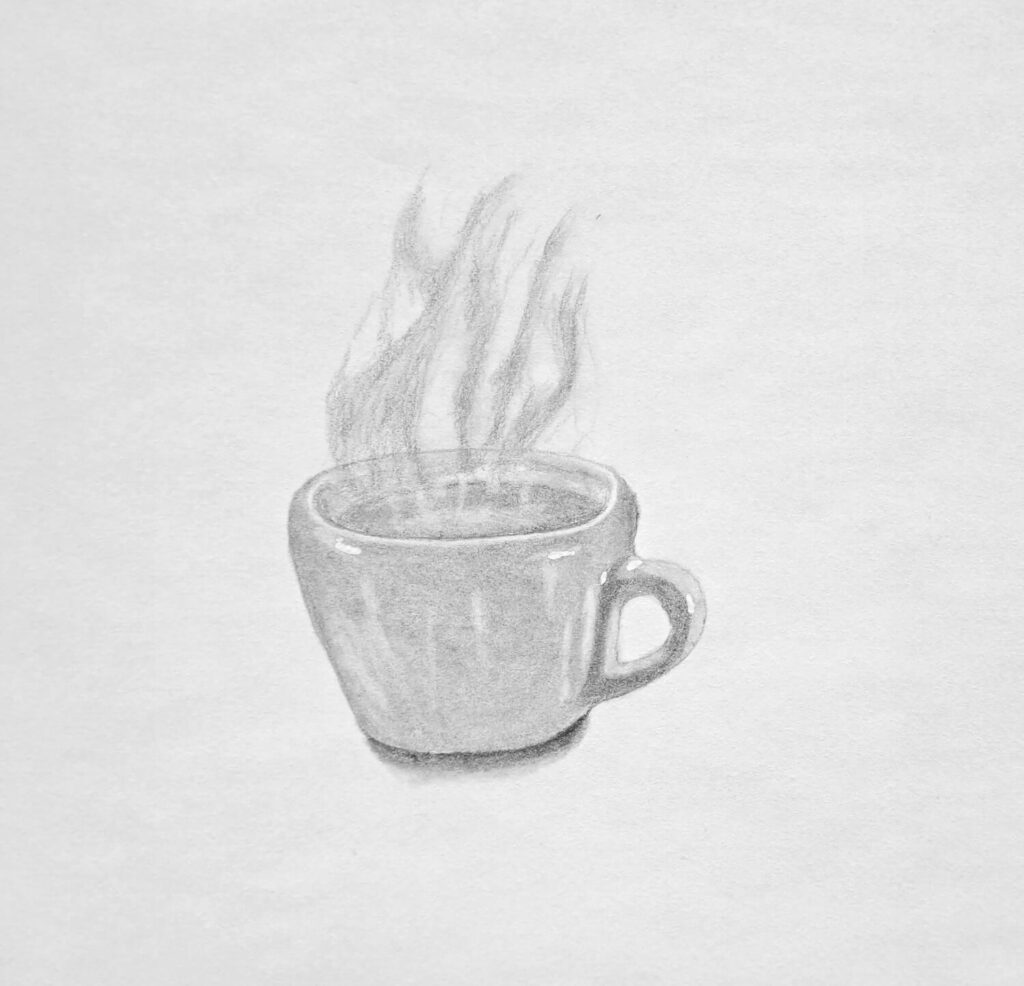
During these cold months, nothing feels more homier than heating your body from the inside out. I’m almost sure that you’ve had a hot beverage today, if not every day.
This is a great place to kick off the drawing challenge – what’s already in front of you, like a mug of hot coffee. The steam has no hard edges, so you’re really drawing shifting values and negative space.
The mug is smooth and shiny with subtle reflections of light.
When sketching, try squinting at your subject. It helps reduce detail so you can see the big shapes of light and dark first.
If you’ve never drawn a mug before, here’s a great tutorial to help you (I actually wrote it as a beginner, as you’ll tell).
2. Drawing a muffin
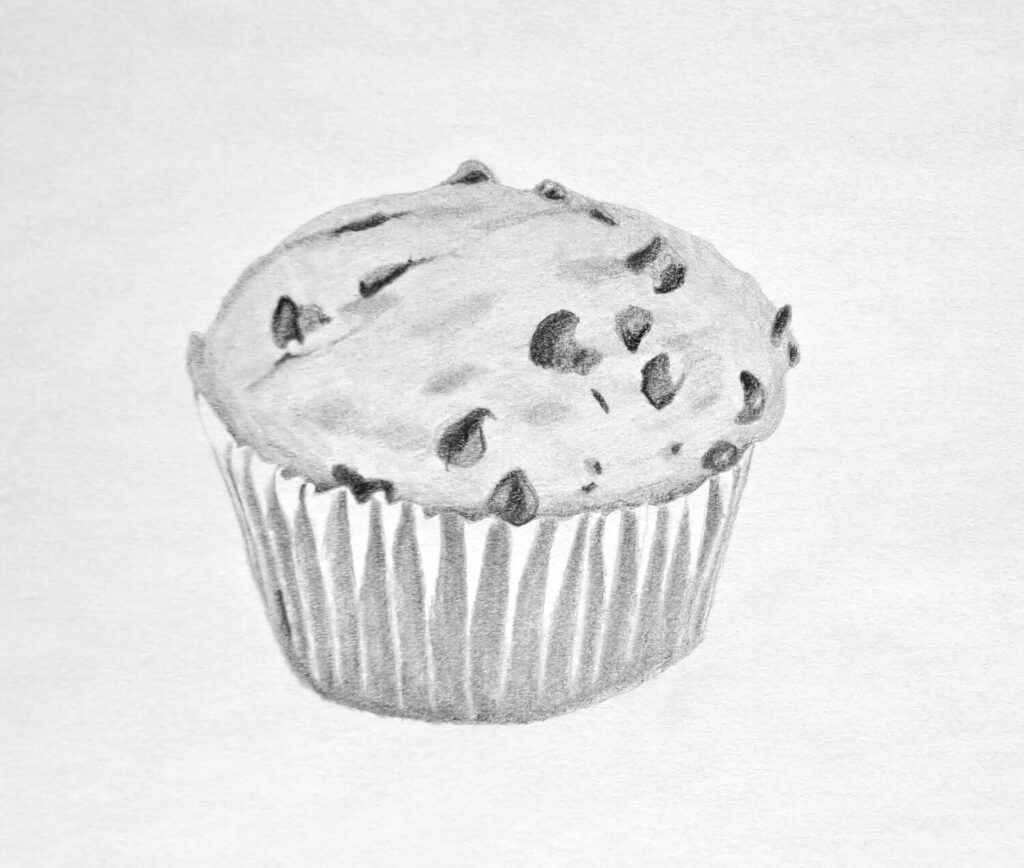
A hot beverage is good, but when combined with a choc chip muffin is bliss.
To draw a muffin, pay attention to the light (almost white) muffin baking liners. They create the ultimate contrast with the dark chocolate chips. The crust is rather rough with soft, spongy interiors and uneven shadows here and there.
For this exercise, we’re not interested in interiors per se, but it helps to have that mental picture.
Pro Tip: No matter how good you are as an artist, you can’t draw every bit of detail or every crumb. Instead, suggest texture with value changes, and the viewer’s brain will do the rest. This is true for all the sketches that follow.
3. Drawing a teapot
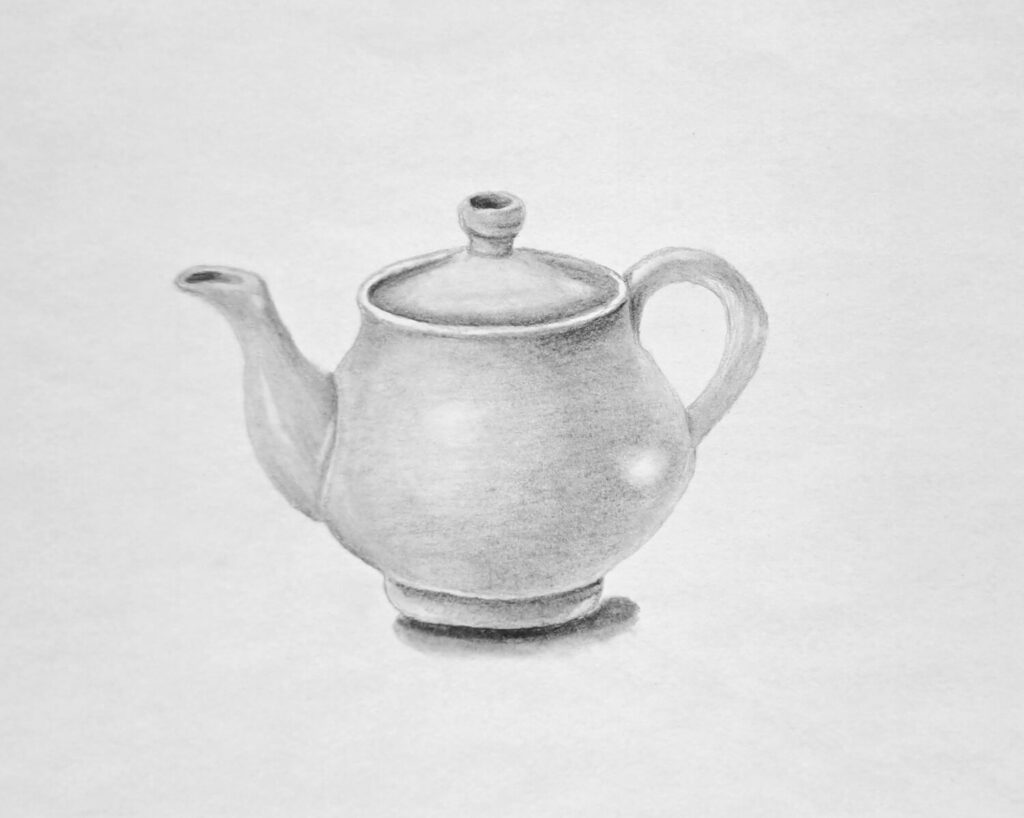
A teapot is a masterclass in basic form. Curves, spouts, handles, and reflective surfaces all in one object.
Vintage teapots are especially fun because they show wear. Small scratches and dull highlights make the drawing feel lived-in.
It combines an understanding of drawing and shading basic forms, such as spheres and cylinders. Check out those two tutorials for further practice.
Cozy Textures and Textiles
4. Drawing a knitted blanket

When winter arrives, sentimental knitted blankets come in handy. Especially when you tuck in to read a book or binge-watch. These functional crafts could serve another important purpose: drawing subjects.
The repeated patterns of knits and threads offer an excellent challenge.
To pull it off, break the pattern into sections and draw one area well. Then echo that texture elsewhere without copying it exactly. Fabric studies like this are common in classical ateliers because they force you to understand folds and gravity, not just surface pattern.
If you’re interested in learning how to draw folds on fabrics or drapery, here’s an interesting guide about that.
5. Drawing a stack of books

Books bring together hard edges and soft wear. Crisp corners meet frayed spines.
Vary the angles slightly so it doesn’t feel stiff. Adding a bookmark or reading glasses gives you a focal point and tells a quiet story, which is something still life painters have done for centuries.
If there are aesthetic patterns, draw and shade them too. They’ll bring your stack to life.
6. Drawing a pair of fluffy, furry, and fuzzy slippers
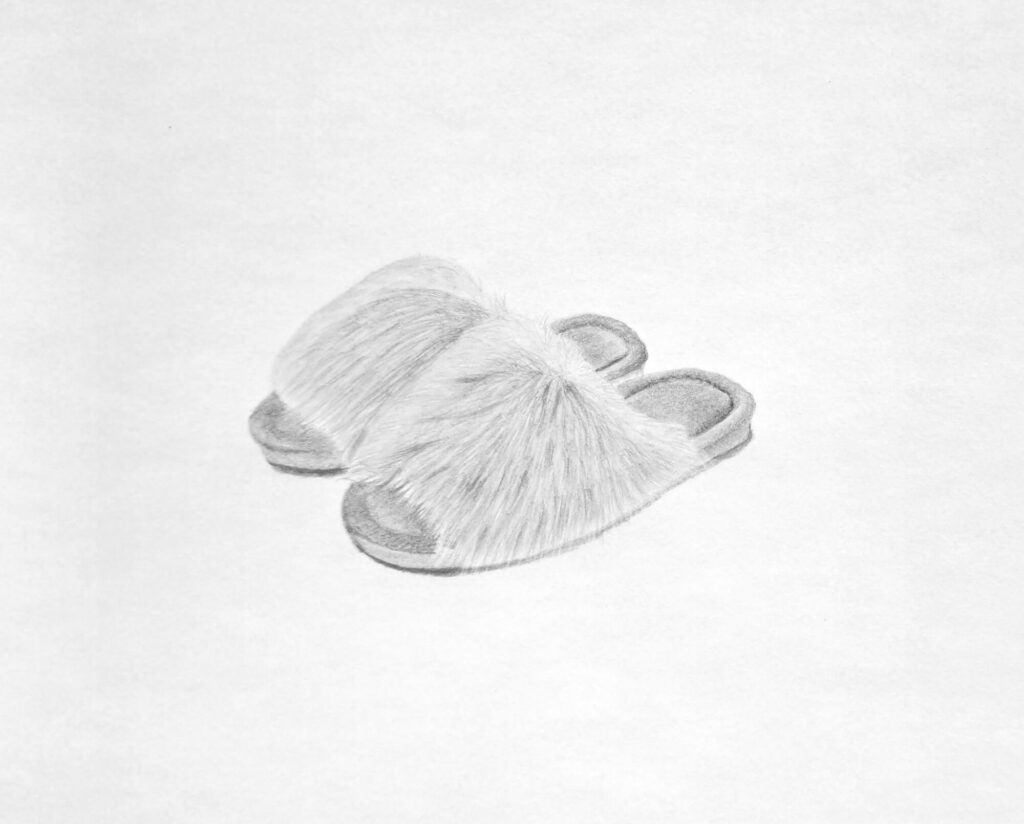
Fluffy and furry slippers are both comfortable and protect your feet from the cold. Sometimes it just feels like you’re wearing the real clouds.
However, drawing realistic furry slippers is another ball game. When sketching soft textures, it’s all about the edges, or rather, the lack of them.
You can start with a light outline sketch (almost invisible), then shade the first layer as uniformly as possible. Blend the graphite to achieve a smooth shade before adding in subtle pencil strokes to represent the fur.
This challenge will be helpful if you’re looking draw furry animal portraits such as guinea pigs, cats, dogs, and so on.
Lighting and Home Ambiance
7. Drawing a burning candle
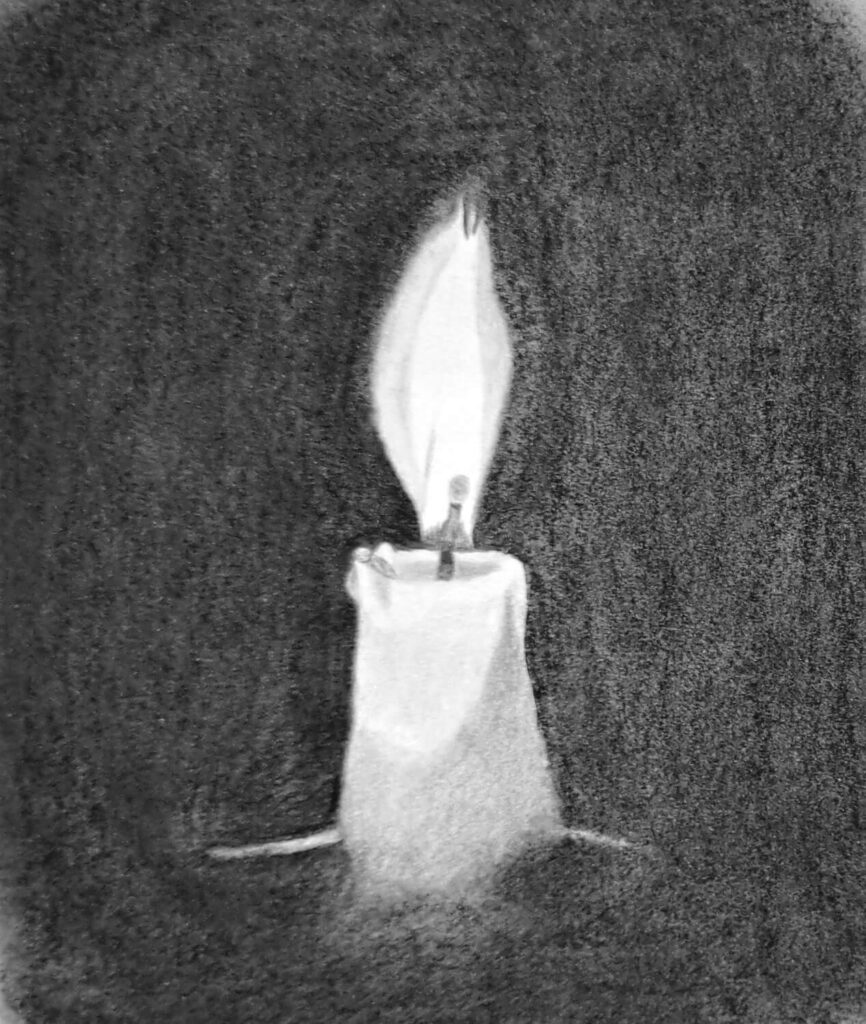
Drawing candles can be very tricky, especially if you’re using graphite pencils. The values are almost always the extreme opposite, with minimal midtones.
While it’s still doable, my approach is much simpler – focus on the negative space!
As you can observe from my drawing, I simply did the outline sketch of the candle and the flame, and shaded the negative space with charcoal.
8. Drawing a crackling fireplace
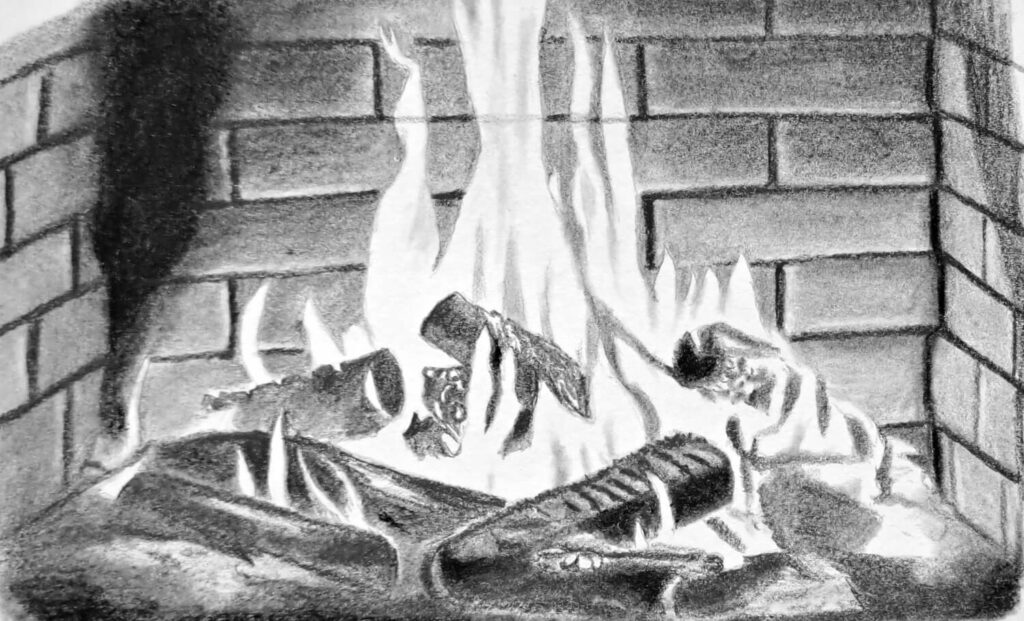
There’s something magical about a living room with a crackling fireplace, especially during those cooler months.
Drawing a fireplace presents one major challenge. And that is a lack of definite shape to sketch. Many artists are accustomed to relating most subjects to specific shapes. I’m also one of those who advocate for breaking down an object into recognizable shapes.
However, when drawing a crackling fireplace, you have to pay attention to the fire movement, the burning wood, and the negative space made of bricks.
All of those items working together create an illusion of a cozy and warm fireplace.
Nature and Simple Pleasures
9. Drawing Pinecones or acorns

Nature has a way of reminding us to slow down and reflect on the past while hoping for a happier future. Things like pinecones and acorns are symbols of that fact. If you observe them, you’ll notice the patterns repeating, overlapping, and tiny shadows everywhere.
To proceed, draw one scale carefully, then simplify the rest.
Natural objects like pinecones are often used in botanical illustration classes because they reward careful observation without needing complex composition.
10. Drawing a single feather
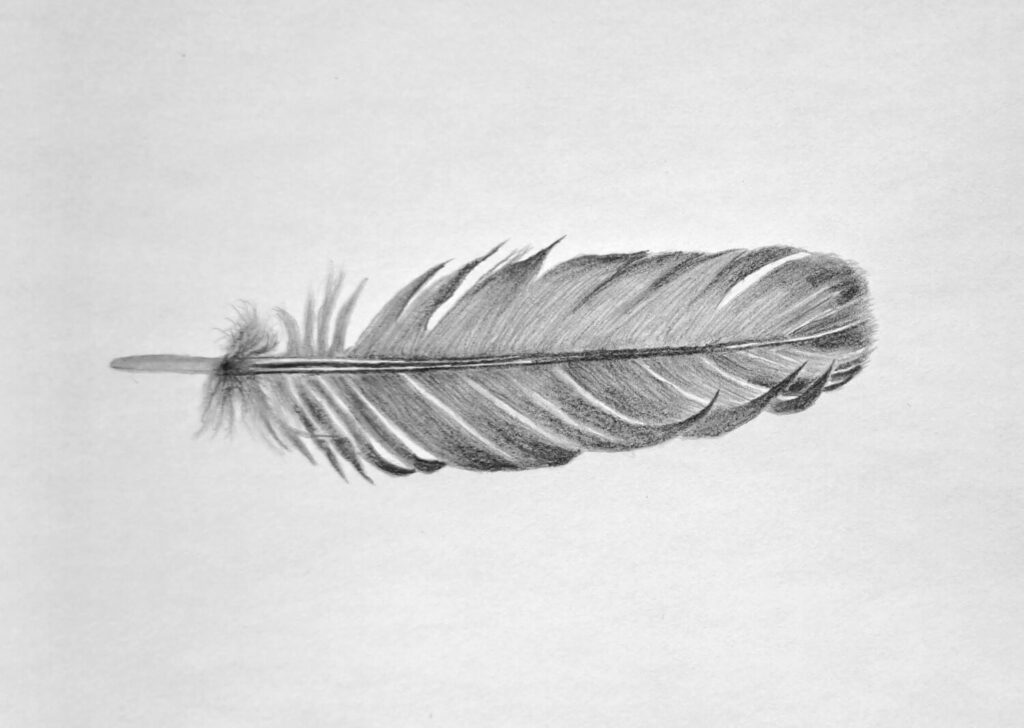
Feathers are a lot like the fluffy challenge we’ve discussed, with a contrast of having a strong central shaft holding everything together.
I always like to begin by sketching the shaft and then outlining the edges lightly. Then I’d shade uniformly to create volume and form before detailing with small pencil strokes. Study my drawing and see if you can replicate it, and then try one of your own. Check out this guide for more tips.
Once you’ve mastered this, try drawing a realistic bird.
11. Your art supplies
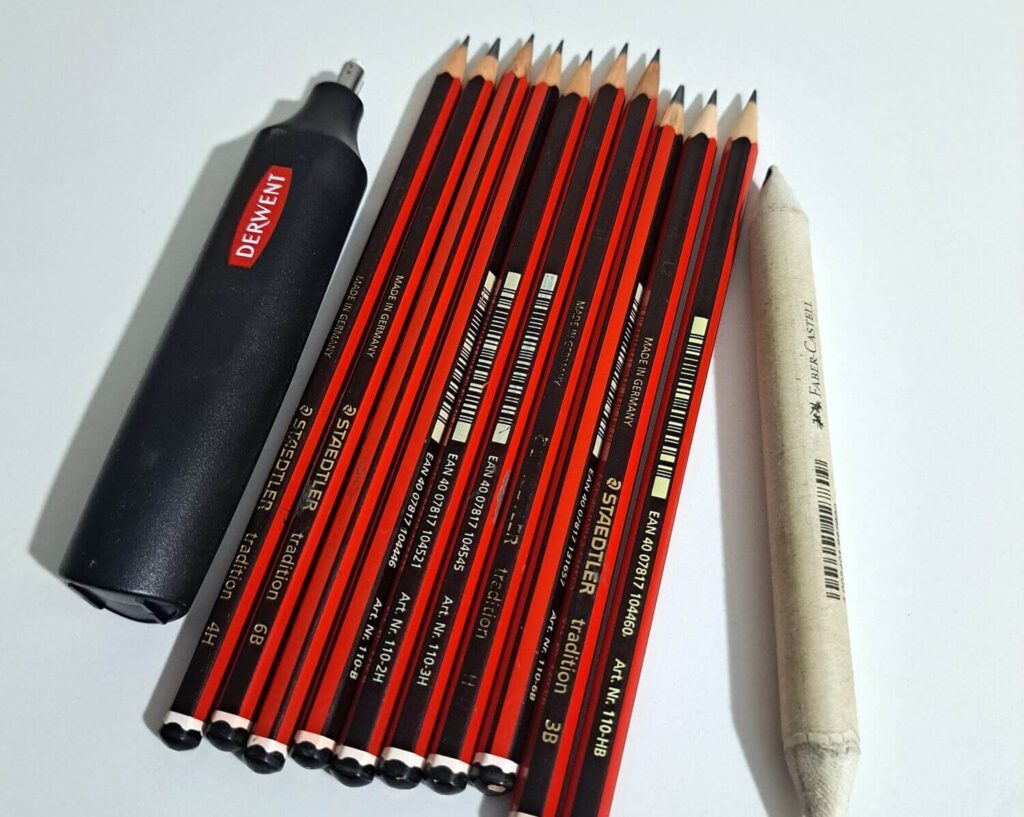
Pencils, brushes, and paint tubes all of them carry marks of use.
These objects are familiar, which makes them easy to overlook. But familiarity is exactly why they’re powerful subjects.
Drawing tools artists use daily have a long tradition in studio still lifes, partly because it builds observation skills without emotional pressure.
How to use this challenge without burning out
You don’t have to draw all of these objects at once. You don’t even have to draw these specifics. Instead, you can just use them as inspiration to come up with your own ideas.
And once you begin, you don’t need to finish polished drawings.
Besides, don’t be rigid. Rotate materials if you can. Graphite for smooth textures, charcoal for soft dark ones, and pen for forcing decisions. Most importantly, notice how winter slows you down.
That’s your opportunity to fill the sketchbook. Check out more texture drawing challenges by clicking on the link below:
Can You Draw These 7 Challenging Textures?
Conclusion
I hope you’ve found the inspiration and courage to draw something today. Even if you’re not good at it, art is expressive.
By all means, express yourself.
No one should ever judge you for it. If they do, you don’t need them in your life. Now, I have one favor to ask: would you mind sharing this list to spread the positivity? It would mean the world to me.
Cheers!